
Silver thiosulfate (STS) is used to block a plant’s response to ethylene, a hormone that controls ripening, aging and flower sex. That one ability makes it useful in very different places: florist coolers, cucumber breeding plots, genetics labs and home seed runs. Here’s how each use connects back to the same chemistry.
Silver Thiosulfate Is Used For Blocking Ethylene
Ethylene is a gaseous hormone that plants sense through receptor proteins, which rely on a copper cofactor to bind it.¹ Silver interferes with that sensing. In 1976, Beyer showed silver applied to plants blocked classic ethylene responses, from leaf and flower drop in cotton to growth changes in peas.² The thiosulfate part of STS solves a delivery problem. Bare silver ions barely move inside a plant, but the thiosulfate complex travels through tissue and keeps its anti-ethylene effect.³
Keeping Cut Flowers Fresh
STS earned its reputation in floriculture. Ethylene speeds up wilting in flowers such as carnations. Researchers found STS-treated carnations became insensitive to ethylene and lasted longer.³ Foliar STS sprays have also been used to extend flowering time in several ornamental species.⁴ That’s still one of the most common commercial uses of STS today.
Silver Thiosulfate Is Used For Making Feminized Seed
Ethylene also helps steer flowers toward female in some plants. Block it, and a genetically female plant can grow male flowers. Silver compounds have had this masculinizing effect in cucumber, melon, ivy gourd, white campion and cannabis.⁵ In cannabis, STS produced more fully male flowers than silver nitrate, and the pollen set seed.⁶ Because the plant stays genetically female, its pollen carries only X chromosomes, so the seeds it fathers should all be female. This is how feminized seed is made.
A Tool for Plant Geneticists
STS also helps scientists study how flower sex works. In one study, researchers treated genetically female cannabis with STS and compared gene activity in induced male flowers, normal female flowers and true male flowers. They found more than 10,500 genes that changed, about 200 of which may help control masculinization.⁷ Without a reliable chemical switch like STS, that comparison would be much harder to set up.
What Silver Thiosulfate Is Used For in a Home Grow
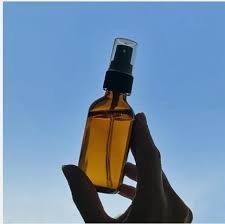
For most growers, STS has one job: turning a favorite female into a pollen donor. Lab STS means weighing silver nitrate and thiosulfate, mixing on spray day and repeating the spray three to six times. Gender Bender STS Spray from California Plant Science packages the same science in one ready-to-use bottle. It’s an STS and colloidal silver hybrid designed for one application, about 50 pumps on a 12–18 inch plant. It’s also formulated for a 24-month shelf life.
Want to see what silver thiosulfate is used for in a home seed run? Start with a healthy female, spray tips, nodes and stems on the day you flip, and wear gloves. Treated plants are pollen-only.
Footnotes
- Rodríguez FI et al. Science 283 (1999): 996–998. doi:10.1126/science.283.5404.996
- Beyer EM. “A Potent Inhibitor of Ethylene Action in Plants.” Plant Physiology 58(3) (1976): 268–271. doi:10.1104/pp.58.3.268
- Veen H. “Effects of Silver on Ethylene Synthesis and Action in Cut Carnations.” Planta 145 (1979): 467–470.
- Lubell JD, Brand MH. HortTechnology 28(6) (2018): 743–747.
- Flajšman M, Slapnik M, Murovec J. Frontiers in Plant Science 12 (2021): 718092. doi:10.3389/fpls.2021.718092
- Mohan Ram HY, Sett R. Theoretical and Applied Genetics 62(4) (1982): 369–375. doi:10.1007/BF00275107
- RNA-seq study of silver thiosulfate-induced male flowers in female Cannabis sativa. Planta (2021). doi:10.1007/s00425-020-03522-y