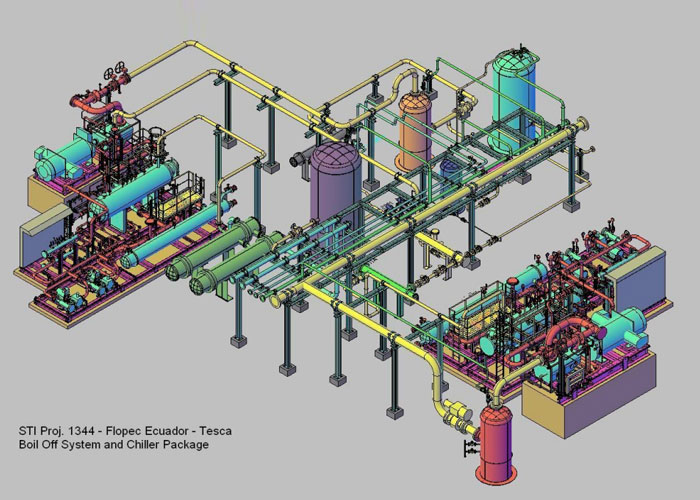

In recent years, the refrigeration and cooling industry has been undergoing significant changes as concerns about climate change and environmental sustainability continue to grow. One technology that has gained attention is the use of propane chillers. These systems use propane (R290) as a refrigerant, offering an alternative to traditional synthetic refrigerants that have higher global warming potential (GWP) and ozone depletion potential (ODP). Understanding the environmental impact of propane chillers is essential for businesses, policymakers, and consumers who aim to adopt greener cooling solutions.
What Are Propane Chillers?
Propane chillers are refrigeration systems that utilize propane as the primary refrigerant. Unlike conventional refrigerants like hydrofluorocarbons (HFCs), propane is a naturally occurring hydrocarbon with minimal environmental impact. These chillers operate on the same basic principles as other vapor-compression refrigeration systems: they absorb heat from a given space or process, compress it, and then release it elsewhere, usually through a condenser. However, the choice of refrigerant makes a significant difference in their ecological footprint.
Propane chillers are highly efficient and suitable for various applications, including commercial air conditioning, industrial process cooling, and even data center climate control. Their energy efficiency is comparable to or better than that of HFC-based chillers, which makes them not only environmentally friendly but also cost-effective over their lifespan.
Environmental Advantages of Propane Chillers
One of the most significant benefits of propane chillers is their low global warming potential. Propane has a GWP of just 3, compared to HFCs like R134a, which has a GWP of 1,430. This stark difference means that even if a small amount of propane leaks into the atmosphere, its impact on climate change is negligible relative to conventional refrigerants.
Additionally, propane does not contribute to ozone layer depletion, which was a major concern with older chlorofluorocarbon (CFC) and hydrochlorofluorocarbon (HCFC) refrigerants. The Montreal Protocol, an international treaty designed to phase out ozone-depleting substances, has led to a gradual transition away from these harmful chemicals. Propane chillers align perfectly with this global effort, offering a sustainable alternative without compromising performance.
Energy efficiency is another crucial factor in evaluating the environmental impact of propane chillers. Lower energy consumption translates into reduced greenhouse gas emissions from power plants, especially in regions where electricity is generated from fossil fuels. Modern propane chillers are designed to maximize energy efficiency through advanced compressors, optimized heat exchangers, and intelligent control systems.
Safety Considerations
While propane is environmentally friendly, it is flammable, which requires careful handling and adherence to safety standards. Proper system design, leak detection, and maintenance protocols are essential to minimize risks. International standards, such as ISO 5149 and EN 378, provide guidelines for the safe installation and operation of hydrocarbon-based refrigeration systems, including propane chillers.
The industry has developed a range of safety measures, including hermetically sealed compressors, electronic leak detection systems, and explosion-proof electrical components. With these measures in place, propane chillers can operate safely while providing significant environmental benefits.
Comparing Propane Chillers to Conventional Systems
When evaluating environmental impact, it is important to compare propane chillers with conventional systems that use HFCs or other synthetic refrigerants. Studies show that switching from HFC-based chillers to propane chillers can reduce a facility’s indirect carbon footprint by 10–20%, depending on energy source and system design. Additionally, the direct emissions associated with refrigerant leakage are virtually eliminated due to propane’s low GWP.
Another advantage is that propane chillers can often operate more efficiently under part-load conditions. Many industrial processes do not require maximum cooling capacity at all times, and the efficiency of propane chillers under varying loads reduces overall energy consumption. This characteristic further enhances their environmental credentials.
Lifecycle Assessment and Sustainability
Understanding the full environmental impact of propane chillers requires a lifecycle assessment, which includes production, operation, maintenance, and disposal. During production, the environmental footprint of components and refrigerant must be considered. Propane as a refrigerant has a minimal footprint compared to the energy-intensive manufacturing of synthetic refrigerants.
During operation, the primary environmental concern is energy consumption. Efficient propane chillers reduce greenhouse gas emissions over time, contributing to sustainability goals. Maintenance and end-of-life disposal are also important. Propane can be safely vented or recycled, avoiding harmful emissions associated with HFCs. Components can often be refurbished or recycled, further minimizing environmental impact.
Adoption Challenges
Despite the clear environmental benefits, adoption of propane chillers is not without challenges. Flammability concerns have historically limited their widespread use, particularly in densely populated or high-risk areas. Regulatory frameworks in some countries are still evolving to accommodate hydrocarbon-based refrigeration systems, which can slow adoption.
Initial capital costs can also be higher than conventional systems due to specialized components and safety features. However, these costs are often offset by lower operational expenses, energy savings, and reduced environmental compliance costs over the system’s lifetime.
Role in Global Climate Strategy
Propane chillers play a crucial role in international efforts to reduce greenhouse gas emissions and transition to low-GWP refrigerants. The Kigali Amendment to the Montreal Protocol, for example, targets the phasedown of HFCs, encouraging the adoption of natural refrigerants like propane. By reducing both direct and indirect emissions, propane chillers contribute to global climate change mitigation strategies.
For businesses, adopting propane chillers aligns with corporate sustainability goals and ESG (Environmental, Social, and Governance) reporting requirements. Many companies are now seeking low-GWP alternatives to demonstrate environmental responsibility and comply with evolving regulations.
Future Developments
Technological advancements continue to improve the performance and safety of propane chillers. Innovations such as variable-speed compressors, smart controls, and integrated leak detection systems are making these chillers more efficient and reliable. Researchers are also exploring hybrid systems that combine propane with other natural refrigerants to optimize performance under various environmental conditions.
As regulatory frameworks evolve and the cost of conventional refrigerants rises, propane chillers are likely to see increased adoption. The combination of low environmental impact, high efficiency, and regulatory compliance makes them an attractive choice for sustainable cooling solutions.
Conclusion
Propane chillers represent a sustainable and environmentally responsible alternative to conventional refrigeration systems. With low global warming potential, zero ozone depletion, and high energy efficiency, they offer clear benefits for reducing the ecological footprint of cooling technologies. While safety considerations and initial costs require careful planning, the long-term environmental and economic advantages are significant. As the world seeks to meet ambitious climate targets and transition to greener technologies, propane chillers are positioned to play a pivotal role in shaping a more sustainable future for refrigeration and cooling industries.
By understanding the environmental impact of propane chillers, stakeholders—from policymakers to industrial operators—can make informed decisions that balance performance, safety, and sustainability, ultimately contributing to a cleaner, more responsible approach to cooling.